“Debt is bad. Always. Forever. Never borrow. Cash only. Live in a cave if you have to.”
If you’ve spent any time on the internet, you’ve probably heard some version of that advice. And while I appreciate the emotional trauma many people have from debt (because yeah, misused debt hurts), here’s the truth:
Debt isn’t automatically bad.
Some debt can actually build wealth.
The problem isn’t debt — it’s the wrong kind of debt, used the wrong way.
As a banker, I see both sides every single day. I see people drowning in “I wanted it now” debt… and I see people using debt strategically to build real assets, improve cash flow, and move their life forward.
Let’s break it down in plain English.
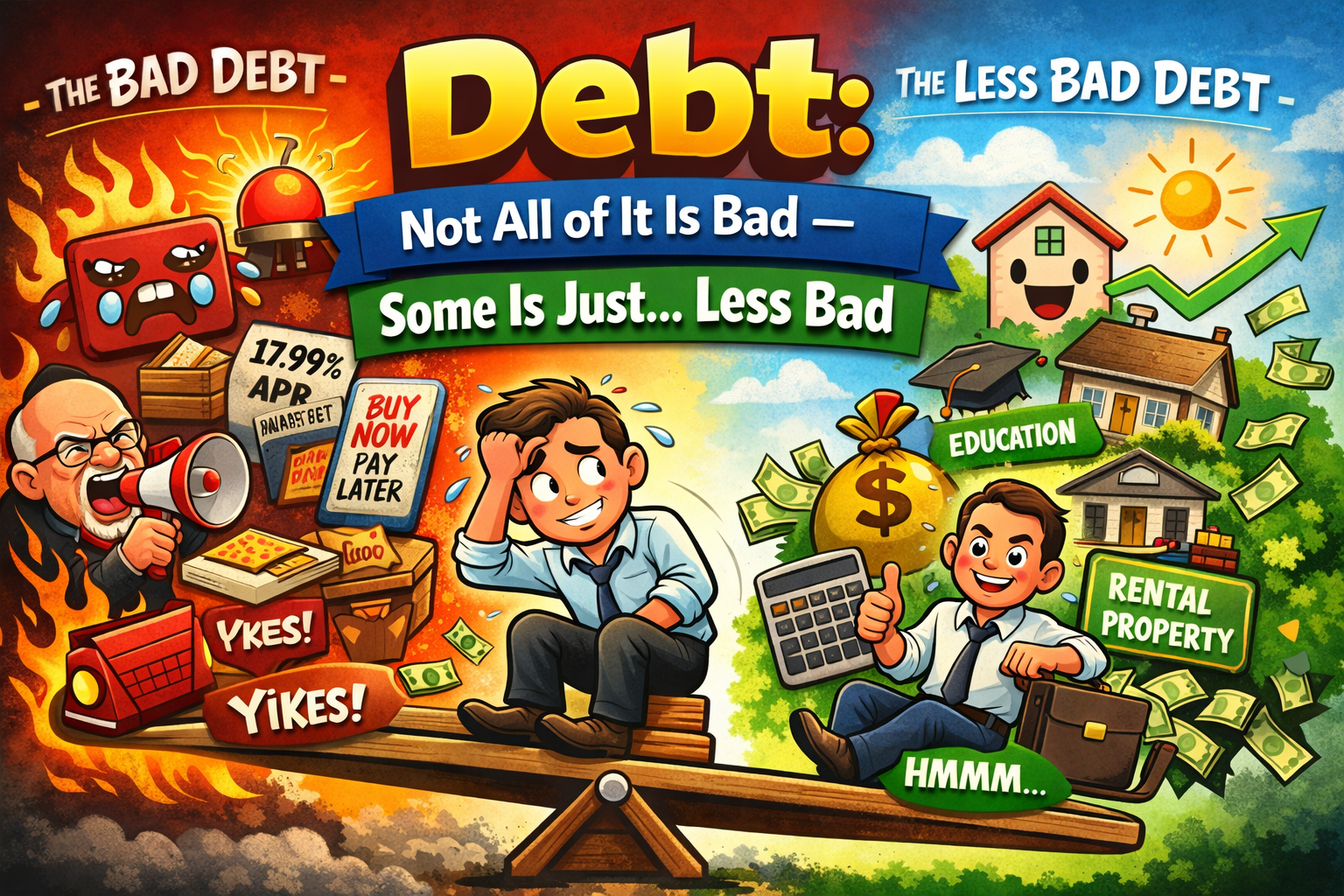
The “Definitely Bad” Debt
Let’s get this out of the way first.
We’re talking about debt that:
- Loses value the moment you get it
- Doesn’t increase your income
- Isn’t necessary
- Comes with high interest and usually some regret attached
Examples:
- High-interest credit cards
- Store financing (“0%…until it isn’t”)
- DoorDash & Buy Now Pay Later (yes, people finance cheeseburgers now)
- Random personal loans for stuff you didn’t need
This is the kind of debt that silently steals your future money and attaches itself to every paycheck like a leech. It doesn’t improve your life long-term — it just feels good in the moment.
This debt = bad. Easy.
The “Less Bad” Debt (The Stuff That Can Actually Make Sense)
Now let’s talk about debt that isn’t the villain everyone makes it out to be. This is debt that can help you:
- build wealth
- improve your financial stability
- create opportunities
- or simply be a smart financial trade-off
Here’s where people get uncomfortable… because this is where nuance lives.
Mortgage Debt
Housing costs money either way. You’re either:
- Paying your landlord’s mortgage
- Or paying your own
A mortgage is debt, yes, but:
- Your payment builds equity
- Your home generally appreciates over time
- You eventually own something real
Is it always the right move? No. But in many cases, mortgage debt is what allows normal people to build their largest asset.
This is “less bad” debt with long-term benefits when done responsibly.
Debt That Makes You More Money (Investment / Business Debt)
This one is huge — and it’s where people really misunderstand debt.
If you borrow money to buy something that:
✔️ Produces income
✔️ Appreciates in value
✔️ Helps grow a business
✔️ Expands earning potential
That is strategic debt.
Examples:
- Buying a rental property that cash flows
- Expanding a business that’s already profitable
- Purchasing equipment that increases production
- Debt consolidations that actually reduce cost and improve cash flow
This is financial leverage — using someone else’s money to build something bigger than what you could do on your own.
Could it go wrong? Sure. Anything can. But when done thoughtfully and with smart planning? It’s one of the biggest tools wealth builders use.
Education & Skill-Building Debt
Not “I got a $100k degree in underwater basket weaving” debt.
But:
- Trade school
- Certifications
- Degrees that actually increase income potential
- Programs with real employment value
If debt leads to significantly higher lifetime earnings, it can be a rational investment.
Debt with a purpose > debt with vibes.
Where People Get in Trouble
Most debt problems come from:
- Borrowing emotionally instead of financially
- Buying “wants” and calling them “needs”
- Ignoring interest cost because the payment “feels manageable”
- Using debt as a lifestyle upgrade instead of a financial tool
Debt isn’t bad.
Impulse debt is bad. Lifestyle debt is bad. “I deserve it” debt is bad.
Debt used with intention? That can be powerful.
How to Tell If Debt Is “Less Bad”
Here’s a simple gut-check framework:
Ask yourself:
- Does this debt build value or income?
- Will I be glad I did this 5–10 years from now?
- Do I understand the payment, interest, and total cost?
- Is this improving my financial position — not just my lifestyle?
If the answer is YES more than NO… you’re likely in the “less bad” zone.
If your justification starts with:
- “I just wanted…”
- “It was on sale…”
- “I’ll figure it out later…”
- “Everyone else has one…”
You already know the answer.
Final Thought
Debt doesn’t determine whether you’re financially responsible.
How you use debt does.
Some debt weighs you down.
Some debt lifts you up.
The goal isn’t to avoid debt forever…
It’s to avoid dumb debt — and be smart, strategic, and intentional with the rest.
Because when used correctly, debt isn’t your enemy.
It can be one of the best financial tools you have.
Disclosure:
This content is intended solely for general financial education and discussion. It does not constitute advice, recommendations, or solicitation of any kind. The author is not providing services as a financial advisor, investment advisor, tax advisor, or legal advisor. All views expressed are personal and do not represent the views, policies, or positions of the author’s employer or any affiliated institution. No compensation has been received for this content. Any financial decisions should be made in consultation with appropriately licensed professionals.